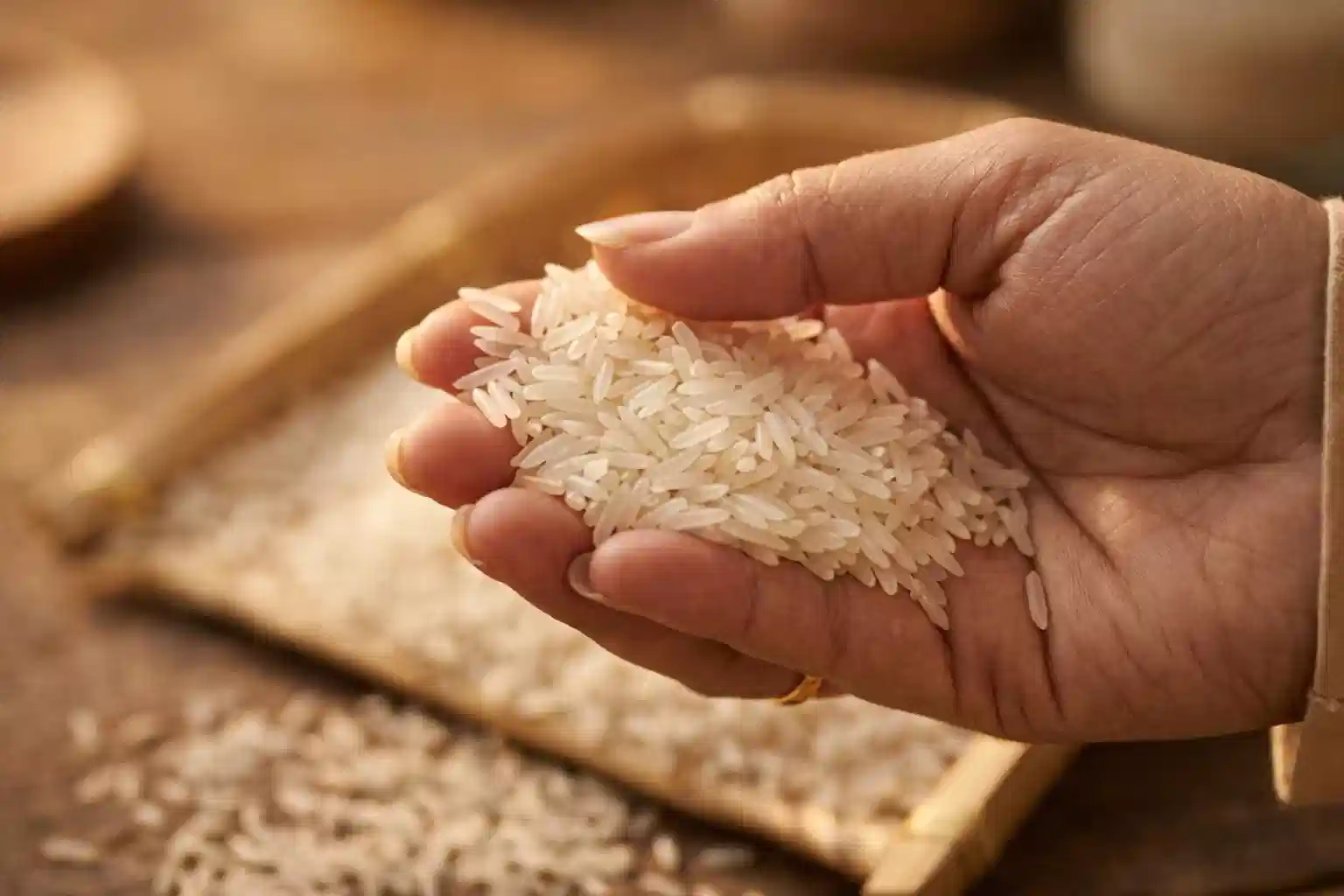
In high-volume agricultural commodity trading and international rice exports, quality failures carry severe financial consequences. A rejected container, a customs quarantine at destination, or an unresolved commercial dispute over broken grains or excessive moisture can easily exceed the margin of the entire shipment.
At Draba Ventures, quality is never treated as a marketing catchphrase. It is executed as an uncompromising standard operating procedure directly on the ground across the Tungabhadra rice belt of Sindhanur, Siruguppa, and Gangavati. Every container, every variety, and every batch conforms strictly to verifiable export tolerances.
Draba Ventures enforces a disciplined 6-stage quality assurance protocol. Our field inspectors draw representative samples at the mill silo to verify moisture (under 14%) and broken grains (under 5%). Every shipment is processed through high-resolution Buhler or Satake optical Sortex sorters, bagged in heavy-duty double-stitched PP woven bags, and loaded only after comprehensive container cleanliness and watertight integrity inspections, backed by official APEDA and FSSAI export documentation.
Key Quality Benchmarks for Commercial Rice Export
Table 1: Physical & Chemical Quality Parameters for Export Rice Varieties
The table below summarizes our contractual tolerances across standard non-basmati varieties supplied to institutional and retail buyers worldwide:
| Quality Parameter | Sona Masoori (Raw/Steam) | RNR 15048 (Low-GI) | IR-64 (Parboiled 5%) | Testing Protocol / Standard |
|---|---|---|---|---|
| Moisture Content | Max 13.5% | Max 13.0% | Max 14.0% | Calibrated Digital Moisture Meter (ISO 712) |
| Broken Grains (under 2/3 length) | Max 4.5% | Max 4.0% | Max 5.0% | Mechanical Sieve Analysis & Weight Count |
| Damaged / Discoloured Grains | Max 0.5% | Max 0.5% | Max 1.0% | Satake / Buhler Full-Colour Optical Cameras |
| Chalky / Milky Grains | Max 2.0% | Max 1.5% | Max 3.0% | Transmitted Light Inspection & Manual Sorting |
| Inorganic Foreign Matter | 0.00% (Nil) | 0.00% (Nil) | 0.00% (Nil) | Magnetic Destoner & Air Density Sifter |
| Varietal Purity | Min 95.0% | Min 96.0% | Min 94.0% | Kernel Length-to-Width Ratio (APEDA Standards) |
Our 6-Step Quality Control Protocol
Step 1 - Mill Selection & Infrastructure Verification
We source exclusively from audited processing facilities across Sindhanur, Gangavati, and Siruguppa. Our management team personally inspects each mill's mechanical drying technology, parboiling tanks, Sortex sorters, and food safety hygiene standards. We refuse to procure from unverified third-party brokers or unrated mills.
Step 2 - Pre-Purchase Lot Sampling & Lab Verification
Prior to executing any commercial contract, our field team physically inspects the lot at the mill silo. We draw composite samples from top, middle, and bottom tiers, testing moisture with ISO-calibrated digital meters and executing test-cooking trials to confirm elongation and aroma.
Step 3 - Optical Sortex Processing & Colour Sorting
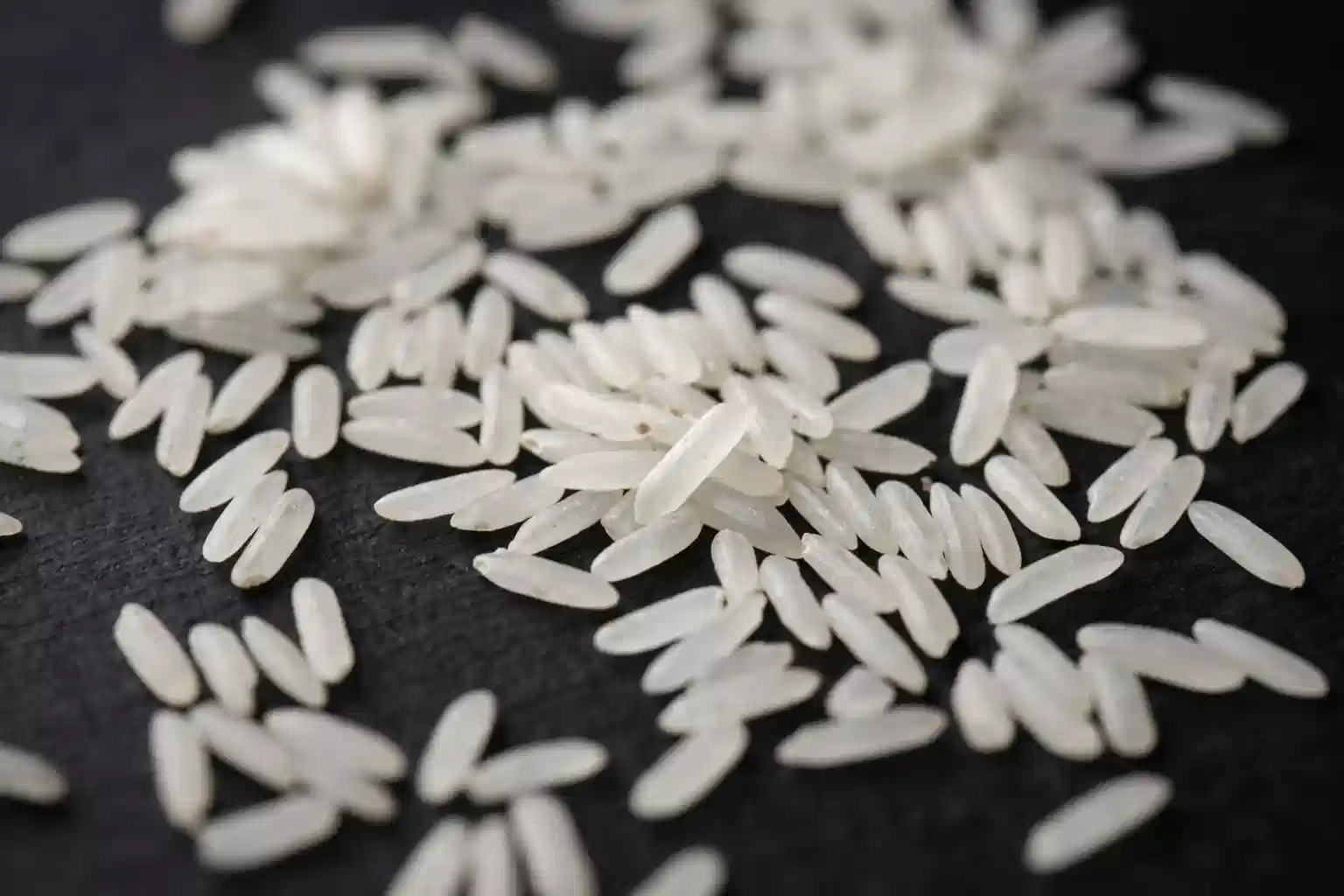
Every quintal of rice passes through state-of-the-art optical Sortex sorting machines equipped with high-resolution digital cameras. Red streaks, immature chalky kernels, darkened grains, and foreign stones are ejected using microsecond air blasts, guaranteeing immaculate visual appeal.
Step 4 - Heavy-Duty Packaging & Double-Stitch Integrity
We utilize export-grade woven polypropylene (PP) bags (25kg or 50kg) treated for UV resistance. Every bag undergoes tare-weight verification and automated heavy-duty double stitching. For private-label clients, custom printing alignment and barcoding are verified before packing.
Step 5 - Container Stuffing & Watertight Inspection
Before loading at the inland container depot (CFS) or port, our inspectors examine the ocean container for structural integrity, rust, moisture stains, and odours. Heavy-duty kraft paper and silica gel desiccants are laid on container floors, and seal serial numbers are photographed and logged.
Step 6 - Port Clearances & Comprehensive Export Documentation
All regulatory export certificates (Commercial Invoice, Packing List, Bill of Lading, APEDA Registration-cum-Allocation Certificate, Phytosanitary Certificate, and Fumigation Certificate) are verified internally before dispatch. Original negotiable documents are dispatched via express courier promptly upon vessel departure.
Table 2: 6-Stage Quality Control Protocol & Verification Checkpoints
| Stage / Checkpoint | Operational Location | Inspection Parameters | Verification Document / Deliverable |
|---|---|---|---|
| Stage 1: Mill Auditing | Primary Mill (Sindhanur/Siruguppa) | Sortex capability, hygienic storage, dryer tech | Mill Audit Scorecard & FSSAI Compliance License |
| Stage 2: Pre-Purchase Sampling | Mill Storage Silo / Paddy Yard | Moisture %, broken %, chalky grains, cooking test | Batch Laboratory Analytical Report |
| Stage 3: Sortex Optical Sorting | Milling Processing Line | Rejection of dark, red, and discoloured grains | Real-time Sorter Defect Elimination Log |
| Stage 4: Packaging & Sealing | Automated Bagging Station | Bag tensile strength, double-stitch, tare weight | Unit Weight Inspection Sheet (25kg/50kg PP Bags) |
| Stage 5: Container Stuffing | Container Freight Station (CFS) | Watertight seal, floor kraft paper, odour-free | Pre-Loading Photographic Container Inspection Report |
| Stage 6: Export Clearance | Ocean Port (Chennai / JNPT Mumbai) | Phytosanitary inspection, methyl bromide fumigation | Phytosanitary Certificate & APEDA RCAC Release |
The On-the-Ground Advantage: Draba Ventures is headquartered directly in Sindhanur, the epicenter of Karnataka's rice belt. We do not operate as remote desktop brokers; our team visits mills daily, oversees loading in person, and takes direct commercial accountability for every metric tonne dispatched.
What This Means for International Buyers
- Exact Varietal Integrity: You receive the precise variety and grade contracted - no blended substitutions.
- Guaranteed Moisture & Broken Tolerances: Contractual moisture below 14% prevents weevil infestation and container sweat during ocean transit.
- Clean Regulatory Clearance: Fully verified APEDA, FSSAI, and Phytosanitary documentation ensures frictionless customs clearance at your destination port.
- Independent Survey Support: We readily accommodate pre-shipment inspections by SGS, Eurofins, Bureau Veritas, or Intertek at the port of loading.
Procure Verified Export-Grade Indian Rice
Request physical pre-shipment samples or receive an immediate FOB/CIF quotation backed by certified laboratory analysis and full APEDA compliance.
WhatsApp Procurement DeskRequest Official Quotation
Frequently Asked Questions
Our quality inspection personnel are physically stationed in the Sindhanur-Siruguppa milling cluster. Before purchasing any batch, we draw representative samples directly from mill silos, measure moisture content using certified digital meters, determine broken grain percentages using calibrated sieves, and perform culinary cooking evaluations. Any lot failing contractual tolerances is rejected at origin.
For export shipments, we strictly guarantee moisture content below 14% (under 13.5% for Sona Masoori and RNR 15048) and broken grain percentages under 5% (with custom specifications under 2% available for premium supermarket brands). These parameters are batch-certified prior to container stuffing.
All export lots pass through modern Buhler or Satake optical sorters equipped with high-resolution digital trichromatic cameras. Defective, discoloured, peck, chalky grains, and foreign particulate matter are detected in freefall and expelled using microsecond pneumatic air ejectors, achieving 99%+ product purity.
Yes. We encourage prospective buyers to request physical pre-shipment couriered samples for independent verification. Furthermore, we facilitate and accommodate third-party port inspections by global surveying agencies including SGS, Eurofins, Bureau Veritas, or Intertek upon buyer request.