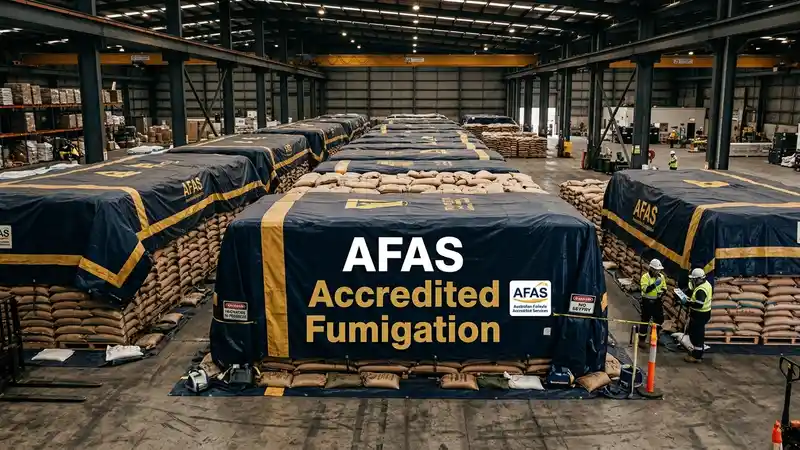
Importing commercial container shipments of rice into Australia represents one of the most rigorously policed agricultural supply chains in global trade. Under the Biosecurity Act 2015, Australia's Department of Agriculture, Fisheries and Forestry (DAFF) maintains zero-tolerance protocols against exotic agricultural pests, with the Khapra beetle (Trogoderma granarium) designated as the primary biosecurity threat. India is classified as a target risk country, meaning that offshore treatment is not optional – it is a mandatory legal prerequisite for container discharge.
To secure immediate biosecurity clearance at Port Botany (Sydney), Port of Melbourne, or Fremantle, Indian rice processors must execute Methyl Bromide (MBr) fumigation through service providers accredited under the Australian Fumigation Accreditation Scheme (AFAS). Presenting unaccredited fumigation paperwork or attempting onshore quarantine treatment results in severe financial penalties, vessel delays, and catastrophic container detention fees that erode commercial margins.
The Australian Department of Agriculture, Fisheries and Forestry (DAFF) mandates offshore Methyl Bromide (MBr) fumigation conducted by an AFAS-accredited provider in India prior to container departure. Indian rice is categorized as a high-risk host for Khapra beetle (Trogoderma granarium). Failure to present a valid offshore AFAS certificate leads to immediate container quarantine, costly onshore gas treatment, or re-export at Port Botany, Port Melbourne, or Fremantle.
Core DAFF Fumigation & Biosecurity Milestones
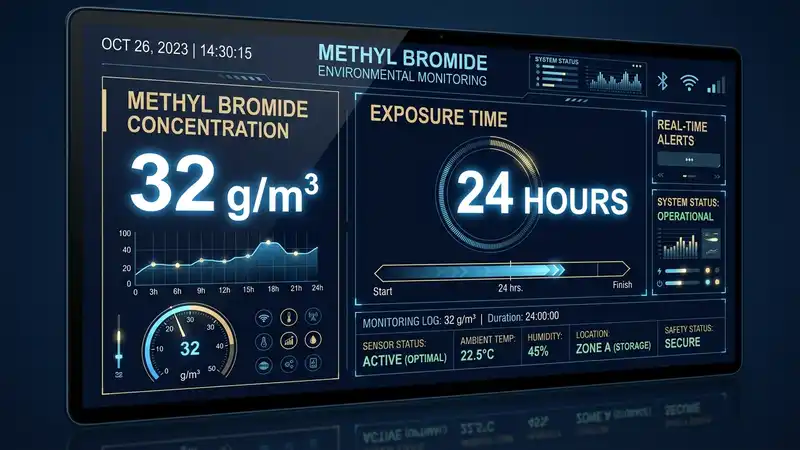
DAFF Statutory Methyl Bromide Dosage Rates & Exposure Schedules
| Commodity Temperature Bracket | Statutory MBr Dosage | Minimum Exposure Duration | Minimum Final Concentration (at 24h) |
|---|---|---|---|
| 21°C or above (Standard Tropical Range) | 32 g/m³ (grams per cubic meter) | 24 Continuous Hours | 16 g/m³ (50% retention minimum) |
| 16°C to 20.9°C (Moderate Ambient Range) | 40 g/m³ (grams per cubic meter) | 24 Continuous Hours | 20 g/m³ (50% retention minimum) |
| 11°C to 15.9°C (Cool Season Range) | 48 g/m³ (grams per cubic meter) | 24 Continuous Hours | 24 g/m³ (50% retention minimum) |
| Below 11°C (Sub-Thermal Threshold) | Treatment Prohibited by DAFF | Not Applicable (Ineffective Gas Sorption) | Fumigation enclosure must be artificially heated to >= 11°C |
5-Step AFAS Offshore Fumigation Procedure: From Mill to Sea
Step 1 – Container Selection & Pre-Loading Inspection
Food-grade 20ft ocean containers are inspected for structural integrity, floor tightness, door gasket condition, and complete absence of biological residue or organic soil.
Step 2 – Gas-Tight Enclosure & Sampling Line Placement
Rice bags are stacked with internal gas circulation channels. Electronic sampling lines are positioned at high, middle, and low points of the cargo to monitor gas distribution.
Step 3 – Controlled MBr Injection & Concentration Monitoring
Pure Methyl Bromide is vaporized and injected at DAFF statutory dosage rates. Readings are logged at 30 minutes, 2 hours, 4 hours, and 24 hours to prove mandatory gas retention.
Step 4 – Forced Mechanical Aeration & Desorption
Following 24 hours of exposure, industrial blowers vent the enclosure until halide detectors confirm residual Methyl Bromide concentrations are strictly below 5 ppm.
Step 5 – AFAS Treatment Certificate & Phytosanitary Integration
The accredited fumigator uploads treatment metrics into the official DAFF portal and issues the AFAS certificate, which is cross-referenced on the Indian NPPO Phytosanitary Certificate.
AFAS Offshore Treatment in India vs. Onshore Port Remediation in Australia
| Operational Parameter | AFAS Offshore Treatment (Draba Ventures) | Onshore Quarantine Remediation (Australian Port) | Commercial Impact on Importer |
|---|---|---|---|
| Direct Treatment Cost | $180 - $260 AUD per 20ft container in India | $2,400 - $4,200 AUD per container at Australian terminal | Saves over $2,000 AUD per container in treatment expenditure |
| Customs & Biosecurity Turnaround | Cleared within 24 to 48 hours of discharge | Held in quarantine for 10 to 21 business days | Eliminates weeks of inventory blockage and supermarket delivery penalties |
| Terminal Demurrage & Storage Fees | Zero terminal demurrage; within 5-day port free-time | Excess demurrage of $140 - $220 AUD per day while on hold | Prevents thousands of dollars in compounding container detention charges |
| Biosecurity Compliance Direction | Green-lane automated biosecurity release | Direction to treat under quarantine supervision (Section 57) | Maintains clean importer compliance record with Australian Border Force |
| Grain Quality & Aeration Control | Multi-stage automated degassing prior to ocean voyage | Rushed terminal degassing under tight logistics pressure | Preserves grain aroma, moisture integrity, and cooking properties |
The Catastrophic Cost of Port Remediation in Australia: When containers land in Sydney or Melbourne without valid AFAS certification, DAFF automatically orders Section 57 quarantine action. Importers face $2,500 to $4,200 AUD in onshore fumigation contractor charges, plus terminal detention fees accumulating at $180 AUD per day. Draba Ventures prevents this commercial liability by ensuring 100% compliance in India before container loading.
Key Strategic Advantages for Australian Rice Wholesalers
- Guaranteed Green-Lane DAFF Clearance: Pre-cleared AFAS treatment certificates ensure immediate release upon vessel arrival at Port Botany, Melbourne, Brisbane, and Fremantle.
- Complete Eradication of Khapra Risk: Certified thermal dosages eradicate all insect life stages, protecting wholesale warehouses from domestic biosecurity audits.
- Full Digital Traceability: Every batch is linked to verifiable gas concentration logs, treatment provider registration numbers, and official government Phytosanitary seals.
- Direct Mill Procurement Savings: Sourcing direct from Draba Ventures' processing plants in Sindhanur bypasses trading brokers, generating substantial margin gains for Australian importers.
Procure DAFF-Compliant Rice with Guaranteed AFAS Treatment
Request certified mill samples, review our official AFAS fumigation documentation, or secure direct container pricing for Sydney, Melbourne, and Fremantle ports.
Contact Biosecurity Team on WhatsAppRequest Formal Quotation
Frequently Asked Questions
DAFF categorizes India as a high-risk country for the Khapra beetle (Trogoderma granarium), one of the world's most destructive stored-grain pests. Methyl Bromide is the only chemical fumigant recognized by DAFF that penetrates grain stacks to eradicate all life stages, including eggs and diapausing larvae.
AFAS is a bilateral biosecurity management system established by the Australian government and overseas regulatory bodies. Under AFAS, only certified fumigation treatment providers registered on the official DAFF list in India can issue valid fumigation certificates for container shipments to Australia.
DAFF biosecurity officers will immediately place a biosecurity hold on the container. The importer must pay for expensive onshore terminal fumigation (typically $2,500 to $4,000+ AUD), port handling fees, and daily container detention charges, or face mandatory re-exportation at their own expense.
We utilize gas-tight enclosures monitored by electronic halide gas detectors and sampling tubes. Gas concentrations are verified at 0.5h, 2h, 4h, and 24h to ensure retention meets DAFF standards. After 24 hours, forced ventilation aerates the container until residual gas levels fall below 5 ppm occupational exposure limits.