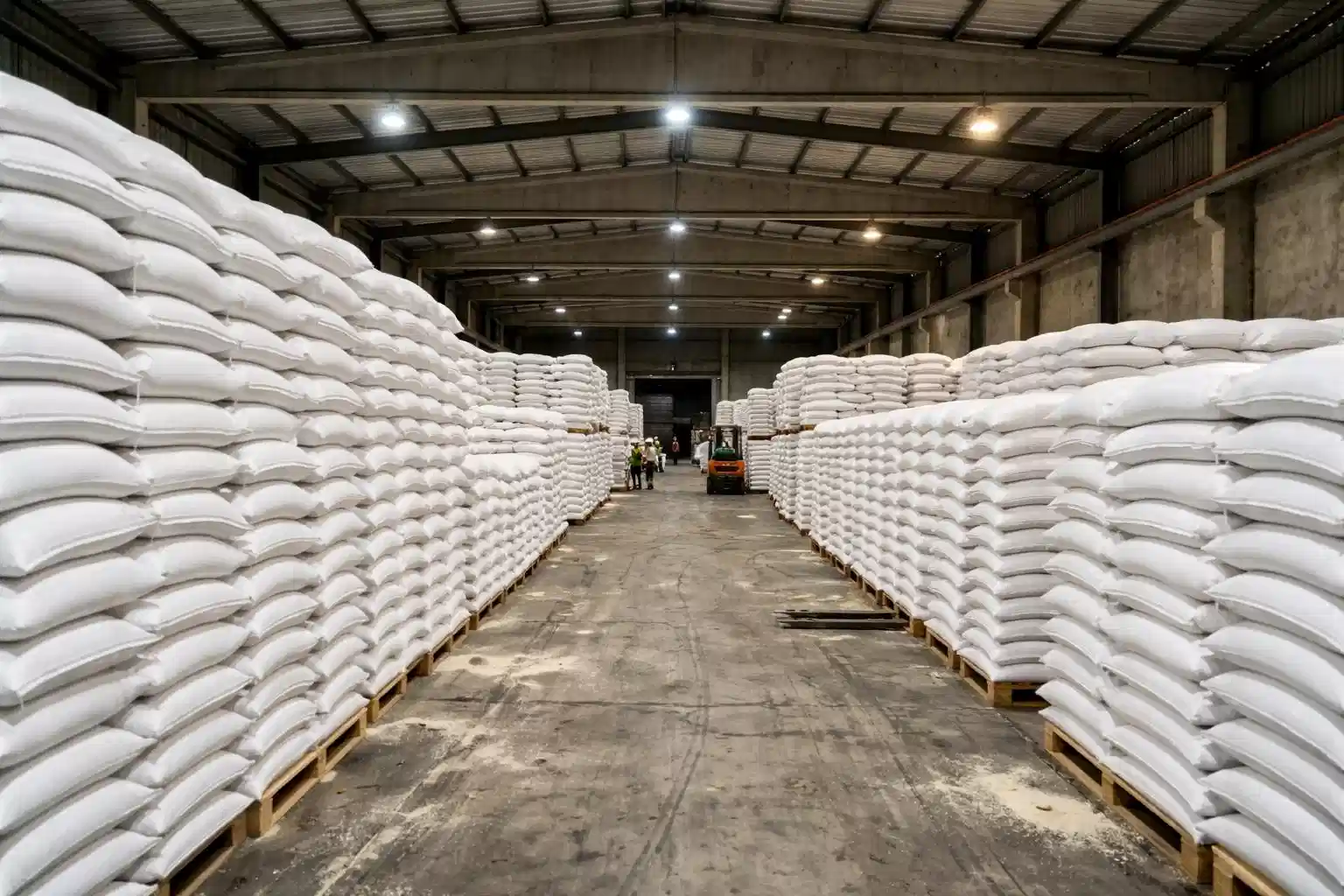
B2B Buyer Summary: Proper packaging is the primary line of defense against maritime cargo damage, moisture condensation, and biosecurity demurrage in international rice trading. The global benchmark for dry bulk container shipping consists of virgin woven polypropylene (PP) sacks (70 to 100 GSM) in 25kg and 50kg units, reinforced with food-grade LDPE moisture-barrier liners. For modern FMCG retail shelves, BOPP-laminated multi-color pouches (1kg to 10kg) deliver shelf-ready appeal. Standard 20ft ocean containers carry 24 to 26 Metric Tons net payload, protected by container desiccant poles and certified phosphine or methyl bromide fumigation.
Calculate FOB & CIF Packaged Rice Pricing
Check live shipping rates from Indian ports with custom bag specifications and palletization options.
Standard Rice Packaging Formats for International Trade
Different international destination markets require tailored packaging formats depending on consumer buying habits, port offloading infrastructure, and distribution channels:
| Packaging Type | Net Weight | Primary Markets & Channels | Technical Characteristics & Benefits |
|---|---|---|---|
| PP Woven Sacks (Standard Bulk) | 50 kg | West Africa, Middle East, government tenders, institutional buyers | Maximum tensile strength, lowest cost per metric ton, rugged port handling |
| PP Woven Sacks (Commercial Retail) | 25 kg / 20 kg | Gulf region, UK, USA, ethnic grocery distributors, foodservice | Ergonomic handling for wholesale kirana stores, cash-and-carry, and HORECA kitchens |
| BOPP Laminated Multi-Color Bags | 1 kg / 2 kg / 5 kg / 10 kg | Supermarket retail chains, private label FMCG brands | Photorealistic 8-color rotogravure printing, high gloss, aroma and moisture barrier |
| Natural Jute / Hessian Bags | 50 kg | European organic specialty markets, traditional African markets | 100% biodegradable natural fiber, high breathability, heavier tare weight |
| Big Bags / FIBC (Jumbo Bags) | 1,000 kg (1 MT) | Flour milling plants, commercial food processors, repackers | Bottom discharge spout, rapid automated plant handling, zero bag handling labor |
PP Woven Bag Technical Engineering Specifications
For export-grade rice shipments, virgin resin composition, tensile fabric strength, and stitching integrity are strictly audited before stuffing:
| Technical Parameter | 25kg Export Bag Specification | 50kg Export Bag Specification | Standard Testing Protocol |
|---|---|---|---|
| Polymer Material | 100% Virgin Polypropylene (PP) | 100% Virgin Polypropylene (PP) | Food-grade certified, zero recycled resin content |
| Fabric Weight (GSM) | 70 – 80 g/m² | 90 – 100 g/m² | ASTM D3776 / Guaranteed tensile drop resistance |
| Weave Mesh Density | 10x10 to 12x12 tapes/inch | 10x10 to 12x12 tapes/inch | Prevents grain flour leakage while permitting fumigant penetration |
| Internal Moisture Liner | LDPE 25–35 μm (recommended) | LDPE 30–50 μm (recommended) | Impermeable vapor barrier against ocean condensation |
| Mouth Stitching / Closure | Double-lock chain stitch with crepe tape | Double-lock chain stitch with crepe tape | Tamper-evident industrial closure preventing seam bursts |
| UV Stabilization | Yes (200–300 KLY) | Yes (200–300 KLY) | Resists solar degradation during open port dock storage |
Container Stuffing Standards & Ocean Logistics (FCL)
Rice is a dense, high-mass commodity. Proper stuffing ensures cargo security and container compliance across global ocean corridors:
| Container Type | Bag Format & Stacking | Bag Count | Net Payload | Dunnage & Cargo Protection Protocol |
|---|---|---|---|---|
| 20ft Standard GP Box | 50kg PP sacks (floor-loaded) | 480 – 520 bags | 24.0 – 26.0 MT | Full kraft paper lining on floor & walls, dunnage airbags, 4x desiccant poles |
| 20ft Standard GP Box | 25kg PP sacks (floor-loaded) | 960 – 1,040 bags | 24.0 – 26.0 MT | Interlocking cross-stacking, anti-collapse door netting |
| 20ft Standard GP Box | Palletized (1,000 x 1,200 mm) | 20 pallets (1.2 MT/pallet) | 24.0 MT | Heavy-duty stretch wrap, rigid corner protectors, strapped bases |
| 40ft High Cube (HC) | Mixed / Consumer retail packs | Weight-constrained | 26.0 – 27.0 MT | Rice hits road gross vehicle limits before filling volumetric space |
Mandatory Bag Printing & Customs Labelling Compliance
To clear customs inspection without detention or fines, export rice packaging must display accurate statutory markings:
| Mandatory Labelling Item | Regulatory Framework | Customs Verification Purpose |
|---|---|---|
| Product Variety & Description | Codex Alimentarius / Import Regulations | Accurate classification (e.g. 'Indian 1121 Parboiled Basmati Rice') |
| Net Weight (kg / lbs) | Legal Metrology Standards | Scale audit matching declared shipping bill weight |
| Country of Origin ('Product of India') | World Trade Organization (WTO) Rules | Mandatory qualification for preferential tariff regimes |
| Lot / Batch Number & Crop Year | Food Safety Traceability (ISO 22000) | Complete backward traceability to milling unit and farm cluster |
| Manufacturer & Exporter Details | APEDA & FSSAI Directives | Full corporate name, registered address, and license numbers |
| Packing Date & Expiration / Best Before | Food Labelling Regulations | Standard validity: 24 months from packing in cool, dry storage |
| Harmonized Customs Code (HS Code) | National Customs Tariffs | Accelerates border classification and clearance verification |
Fumigation Requirements & Biosecurity Protocols
Fumigation is mandatory for all international rice exports to guarantee pest-free cargo on arrival:
- Aluminium Phosphide (Phostoxin): The standard international treatment. Applied at 1.5g to 3.0g per cubic meter under gas-tight PVC tarpaulins or inside hermetically sealed containers for 5 to 7 days. It vents cleanly with zero harmful chemical residues on grain.
- Methyl Bromide (MB): Mandated by specific importing authorities (e.g., DAFF Australia, USDA-APHIS, Egypt, Jordan). Applied at 48g/m³ for 24 hours at temperatures above 21°C by licensed fumigation contractors.
- Official Certification: All shipments must carry a government-stamped Fumigation Certificate confirming dosage, active agent, exposure duration, and aeration date.
Private Label OEM Packaging for Global Distributors
Draba Ventures provides full private label contract manufacturing for international distributors and retail supermarket chains:
- Custom Cylinder Engraving: High-definition multi-color rotogravure printing on BOPP laminated film with custom branding, nutritional panels, and barcodes.
- Packaging Sizes: 1kg, 2kg, 5kg, 10kg, 20kg, 25kg, and 50kg.
- Lead Times: Cylinder engraving completed within 7 to 10 days; bag fabrication within 10 to 14 days; followed by immediate Sortex milling, filling, and container stuffing.
- Minimum Order Quantity (MOQ): 1 x 20ft FCL (approx. 25 Metric Tons) for standard printed PP woven bags; 2 x 20ft FCL for custom BOPP cylinder runs.
Frequently Asked Questions
Need Custom Packaged Rice for Your Destination Market?
Draba Ventures provides private label, branded, and standard bulk packaging for all Indian rice varieties. Contact our export desk today for custom bag proofs and FOB or CIF freight quotes.
Request a Packaging Quote