For first-time or medium-scale Kenyan importers, CIF Mombasa provides the lowest commercial risk by fixing ocean freight and marine cargo insurance into a single transparent invoice price ($410-$455/MT for IR-64 Parboiled 5% Sortex). Experienced volume traders managing over 20 containers per month frequently leverage FOB Kakinada ($340-$375/MT) to negotiate direct carrier service contracts and extended container demurrage free time (21-28 days at Mombasa). Landed cost in Nairobi for 25 MT on CIF terms averages $12,050-$13,200 before variable customs duty.
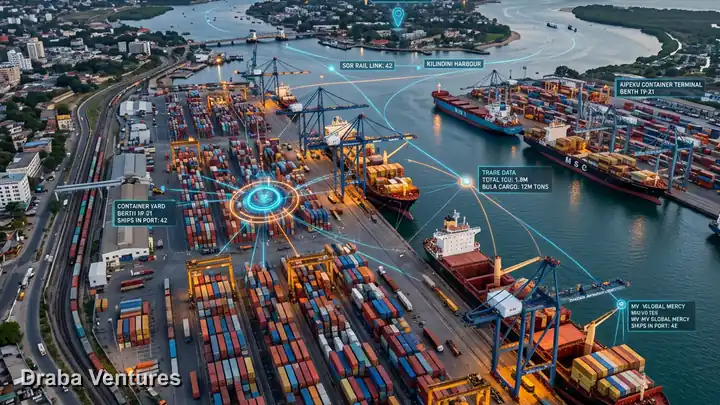
Incoterms 2020 Definitions: FOB Kakinada vs. CIF Mombasa
International Commercial Terms (Incoterms 2020) govern the allocation of costs, commercial responsibilities, and operational risks between Indian grain exporters and Kenyan agricultural buyers. In the Indian rice trade entering Mombasa, two terms account for over 95% of bilateral contracts: Free On Board (FOB) at an Indian departure port and Cost, Insurance, and Freight (CIF) delivered to Kilindini Harbour, Mombasa.
Under FOB (Free On Board, Port of Loading - Kakinada or Mundra), Draba Ventures bears all operational costs and export regulatory liabilities until the rice bags are loaded aboard the chartered vessel or container ship at the Indian terminal. The Kenyan importer contracts the ocean carrier, procures marine cargo insurance, and shoulders all freight and transit hazards from the moment the goods pass the ship's rail.
Under CIF (Cost, Insurance, and Freight, Port of Destination - Mombasa), Draba Ventures contracts the ocean freight, pays the liner booking charges, and procures marine cargo insurance covering Institute Cargo Clauses (A) or (C) to Mombasa. However, buyers must note a crucial legal distinction: risk transfers at the load port, while cost obligations extend to Mombasa. The buyer remains responsible for import clearance, port handling charges, and inland logistics upon arrival.
| Contract Parameter | FOB (Origin Port, India) | CIF (Kilindini Port, Mombasa) | Commercial Implication for Importer |
|---|---|---|---|
| Inland Freight in India | Exporter Responsibility | Exporter Responsibility | Included in base price under both terms. |
| Export Customs & APEDA Inspection | Exporter Responsibility | Exporter Responsibility | Phytosanitary, Fumigation & Certificate of Origin handled by seller. |
| Loading Port Terminal Handling (THC) | Exporter Responsibility | Exporter Responsibility | Vessel loading charges absorbed by seller in India. |
| Ocean Freight to Mombasa | Importer Responsibility | Exporter Responsibility | CIF fixes ocean freight risk; FOB allows forwarder volume arbitrage. |
| Marine Cargo Insurance | Importer Responsibility | Exporter Responsibility | CIF mandates minimum Institute Cargo Clauses (C) coverage. |
| Transfer of Transit Risk | Across Ship's Rail at Indian Port | Across Ship's Rail at Indian Port | Under CIF, damage in transit is settled via seller's insurance policy. |
| Import Declaration Fee (IDF - 2.25%) | Importer Responsibility | Importer Responsibility | Calculated on customs value (CIF equivalent) under both terms. |
| Railway Development Levy (RDL - 2%) | Importer Responsibility | Importer Responsibility | Statutory tax levied on CIF value regardless of Incoterm chosen. |
| Mombasa Wharfage & Port THC | Importer Responsibility | Importer Responsibility | Paid directly to Kenya Ports Authority (KPA) / shipping line agent. |
| Destination Demurrage / Free Time | Negotiated by Importer | Negotiated by Exporter | Draba Ventures negotiates 14 to 21 free demurrage days on CIF bookings. |
Itemized Landed Cost Calculation: 20ft FCL IR-64 Parboiled Rice into Nairobi
To accurately compare commercial viability, agricultural procurement teams must analyze the total landed cost per metric tonne inside their warehouse rather than relying solely on the port quotation. A standard 20-foot heavy-duty container comfortably accommodates 25 metric tonnes (500 bags of 50 kg PP bags) of Indian non-basmati rice within Kenya Ports Authority axle-load weight restrictions.
The landed cost structure encompasses ocean transport, marine insurance, Kenya Revenue Authority (KRA) statutory fees (IDF and RDL), Mombasa terminal handling charges, Kenya Plant Health Inspectorate Service (KEPHIS) inspection, Kenya Nuclear Regulatory Authority (KNRA) screening, clearing agency documentation fees, and Northern Corridor highway transport to Nairobi industrial parks.
| Cost Component | FOB Kakinada Basis (25 MT) | CIF Mombasa Basis (25 MT) | Statutory Basis & Calculation Notes |
|---|---|---|---|
| Cargo Value (25 MT IR-64 5% Sortex) | $8,875 ($355/MT) | $8,875 ($355/MT) | Export mill procurement, sortexing, bagging, and Indian loading. |
| Ocean Freight (Kakinada to Mombasa) | $1,750 (Paid by Buyer) | $1,700 (Included in CIF) | Direct liner routing: 18-24 days transit via Colombo/Salalah. |
| Marine Cargo Insurance (All Risks) | $75 (Buyer Policy) | $50 (Bulk Policy Rate) | Institute Cargo Clauses (A) with war and strikes coverage. |
| Subtotal Commercial Price | $8,875 (Invoice to Seller) | $10,625 (Invoice to Seller) | Base commercial invoice amount presented to commercial bank. |
| Import Declaration Fee (IDF 2.25%) | $240 | $239 | KRA Simba / ICMS assessment based on customs CIF value. |
| Railway Development Levy (RDL 2.0%) | $213 | $212.50 | Statutory levy collected by Kenya Revenue Authority. |
| Mombasa Port Charges & Terminal Handling | $720 | $720 | KPA shore handling, wharfage, and terminal equipment fees. |
| KEPHIS Inspection & Radiation Clearance | $140 | $140 | Phytosanitary verification and mandatory KNRA gate screening. |
| Clearing Agent Professional Fee | $300 | $300 | Customs documentation, bond processing, and gate pass processing. |
| Road Haulage: Mombasa Port to Nairobi | $380 | $380 | Container transport via Northern Corridor (licensed multi-axle truck). |
| Total Landed Cost Nairobi (Excl. Duty) | $12,693 | $12,666.50 | Delivered into Nairobi industrial warehouse before variable customs tariff. |
| Landed Cost Per Metric Tonne | $507.72 / MT | $506.66 / MT | Net delivered unit cost. Import duty varies by EAC gazette status. |
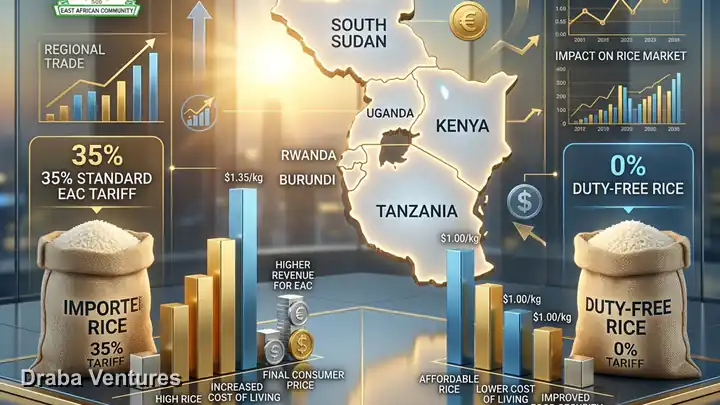
Origin Port Dynamics: Kakinada Anchorage vs. Mundra & JNPT
The choice of Indian departure port fundamentally dictates your freight rate, transit reliability, and container availability for shipments to East Africa. Kakinada Anchorage Port and Kakinada Deepwater Port handle over 65% of India's non-basmati rice exports due to their geographic proximity to the Godavari basin and Siruguppa paddy production hubs.
However, containerized shipments to East Africa can also route efficiently through western Indian hubs including Mundra and Jawaharlal Nehru Port (JNPT) near Mumbai, depending on seasonal vessel rotations, feeder space availability, and empty container positioning by major shipping lines like Maersk, MSC, and CMA CGM.
| Port Attribute | Kakinada Deepwater Port (Andhra Pradesh) | Mundra Port (Gujarat) | JNPT / Nhava Sheva (Maharashtra) |
|---|---|---|---|
| Primary Rice Supply Hinterland | Andhra Pradesh, Telangana, Karnataka (Siruguppa) | Punjab, Haryana, Madhya Pradesh, Rajasthan | Maharashtra, Central India, Karnataka border |
| Transit Time to Mombasa | 18 to 25 days (via transshipment hubs) | 12 to 16 days (direct East Africa sailings) | 14 to 18 days (frequent feeder connections) |
| Average Ocean Freight (20ft FCL) | $1,650 - $1,800 | $1,450 - $1,600 | $1,500 - $1,650 |
| Container Availability | Subject to seasonal equipment repositioning | Extremely high container inventory | Consistent container availability year-round |
| Best Application | Cost-effective bulk breakbulk & volume FCL | Urgent delivery schedules & north Indian varieties | Mixed spice and rice consolidated containers |
Payment Structure & Currency Risk Management in Kenya
Navigating currency volatility between the Kenya Shilling (KES) and the US Dollar (USD) requires rigorous financial structuring. For first-time trade transactions, Draba Ventures accepts Irrevocable Letters of Credit (LC at Sight) confirmed by tier-one international or Kenyan commercial banks (such as KCB Bank, Equity Bank, or Standard Chartered Kenya).
Established repeat buyers with strong operational track records utilize Documentary Collection (Cash Against Documents - CAD / DP) or Telegraphic Transfer structures (30% advance deposit with 70% balance payable against scanned original Bills of Lading, Phytosanitary Certificate, Certificate of Origin, and SGS Weight & Quality Inspection Certificates). This balances commercial security while minimizing financing expenses.
Frequently Asked Questions
What is the primary difference between FOB and CIF for rice imported into Kenya?
Which Incoterm is recommended for first-time Kenyan rice importers?
How are KRA IDF and RDL fees calculated on FOB shipments?
What demurrage free time should Kenyan buyers secure at Mombasa Port?
Can Draba Ventures quote both FOB and CIF prices simultaneously?
What is the typical transit duration from Kakinada to Mombasa Port?
Direct Rice Procurement & CIF Mombasa Contracting
Partner with Draba Ventures for certified non-basmati rice exports from Andhra Pradesh and Karnataka. Enjoy verified 21-day container demurrage free time, dual-port loading options, and bank-backed documentation.
Request Proforma Invoice