Kenya's National Treasury has gazetted a temporary duty-free import window for 490,000 MT of strictly Grade 1 Milled White Rice (HS Code 1006.3090), waiving the standard 35% East African Community (EAC) Common External Tariff (CET). This delivers an immediate landed margin savings of $145–$170 per MT. Qualifying shipments must strictly meet KEBS KS EAS 128:2013 Grade 1 parameters (max 5.0% broken, max 13.0% moisture, max 2.0% chalky). Mandatory compliance includes a Pre-Export Verification of Conformity (PVoC) Certificate of Conformity from SGS India and KNRA radiation screening at Mombasa Port.
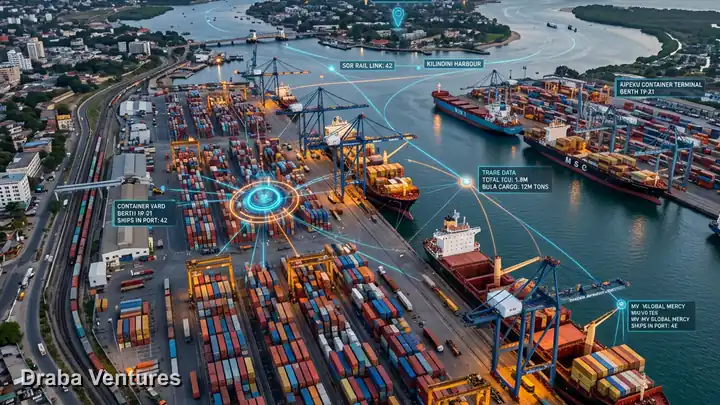
1. Executive Policy Breakdown & EAC Tariff Shift
For B2B agricultural commodity trading houses, regulatory arbitrage represents an exceptional avenue for commercial margin expansion. Kenya’s National Treasury gazetted a duty-free import window for 490,000 Metric Tonnes (MT) of Grade 1 Milled White Rice to stabilize domestic retail staple pricing and counter regional grain deficits.
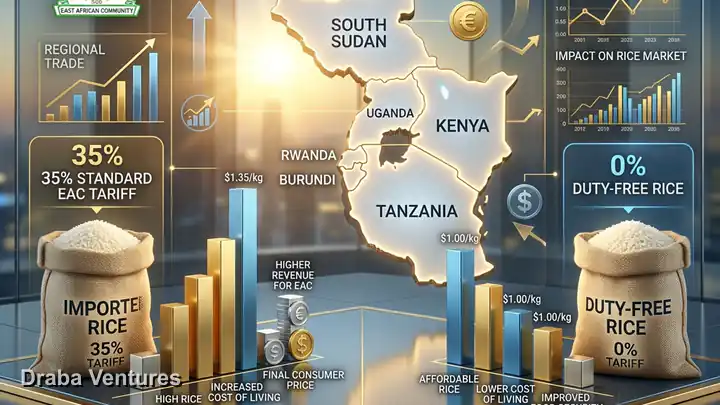
Under standard operational regulations, rice imported into Kenya and the wider East African Community (EAC) is subject to a 35% to 75% Common External Tariff (CET) designed to protect local paddy farming. The 2026 gazette notice temporarily waives this tariff to 0% (Duty-Free) for qualifying Grade 1 milled white rice, generating an immediate landed cost saving of approximately $145 to $170 per Metric Tonne at Mombasa Port.
Crucially, this tariff exemption is strictly volume-capped and limited exclusively to non-parboiled Grade 1 milled white rice. Lower grades, standard 15% or 25% broken white rice, and parboiled rice do not qualify and will face the full punitive EAC CET at Kilindini Harbour.
| Policy Parameter | Gazetted Statutory Requirement | Commercial Implication for Importers |
|---|---|---|
| Gazetted Quota Volume | 490,000 Metric Tonnes (MT) | Exempt volume is allocated on a first-cleared quota basis |
| Eligible Commodity | Grade 1 Milled White Rice (Non-Parboiled) | Parboiled and broken grades (>5%) are strictly excluded |
| Tariff Exemption | 0% Customs Duty (Standard 35% EAC CET Waived) | Delivers immediate landed margin arbitrage of $145–$170/MT |
| Primary Port of Discharge | Kilindini Harbour, Port of Mombasa, Kenya | Immediate rail dispatch via SGR to ICD Embakasi Nairobi |
| Mandatory Quality Standard | KEBS KS EAS 128:2013 Grade 1 Limits | Shipments exceeding 5.0% broken face 35% tariff re-imposition |
| Origin Verification Mandate | Pre-Export Verification of Conformity (PVoC) | Must obtain SGS/Intertek CoC in India prior to container loading |
2. KEBS KS EAS 128:2013 Standards: The Grade 1 Compliance Baseline
The primary financial risk in executing Kenyan duty-free rice contracts is a quality specification mismatch. The National Treasury’s duty-free gazette is legally tied to the Grade 1 tier defined in the Kenya Bureau of Standards (KEBS) East African Standard for Milled Rice (KS EAS 128:2013).
If an arriving consignment tests above 5.0% broken rice or exceeds 2.0% chalky grain content, customs authorities will strip the duty-free status and re-classify the cargo under standard EAC CET (35%), instantly wiping out importer margins and generating substantial terminal demurrage.
To consistently hit Grade 1 parameters, Indian exporters must deploy modern milling equipment with multi-stage optical color sorters (such as Buhler Sortex machines). Standard mechanical hulling and sieving cannot achieve the microscopic tolerances demanded by KEBS surveyors.
| Quality Parameter (KS EAS 128:2013) | Grade 1 Maximum Statutory Limit | Risk Level if Exceeded at Mombasa |
|---|---|---|
| Moisture Content | Max 13.0% | Critical: Causes mold, microbial growth, and total rejection |
| Broken Grains | Max 5.0% | Fatal: Immediate loss of duty-free status; 35% CET applied |
| Chalky / Immature Grains | Max 2.0% | High: Results in down-grading to Grade 2; tariff penalty |
| Foreign Matter (Organic/Inorganic) | Max 0.1% | Severe: Port health detention and mandatory cleaning |
| Discolored / Damaged Grains | Max 1.0% | High: Commercial dispute with buyers; quarantine hold |
| Paddy Kernels | Max 0.2% (approx. 5 seeds / kg) | Moderate: Requires secondary screening documentation |
| Milling Degree & Processing | Well-Milled, 100% Optical Sortex Cleaned | Mandatory requirement for pre-export visual inspection |
3. Port of Mombasa Logistics & PVoC Documentation Pipeline
Executing CIF Mombasa shipments under the duty-free window requires rigid documentary synchronization between the loading port in India (Kakinada, Chennai, or Mundra) and Kilindini Harbour:
- Pre-Export Verification of Conformity (PVoC): An accredited surveyor (SGS India under the 2026–2029 cycle) must draw representative samples from the production lot, verify moisture and broken percentages against KS EAS 128:2013, and issue a digital Certificate of Conformity (CoC). Uncertified containers face a mandatory 15% CIF penalty and destination inspection holds at Mombasa.
- Phytosanitary & KNRA Radiation Clearance: The consignment must carry an official Indian NPPO Phytosanitary Certificate confirming freedom from Khapra beetle (Trogoderma granarium). Upon berthing at Mombasa, containers undergo automated radiation scanning under Kenya Nuclear Regulatory Authority (KNRA) protocols.
- Bill of Lading Precision: The commercial invoice, packing list, and ocean Bill of Lading must state verbatim: "Grade 1 Milled White Rice". Generic phrasing such as "Long Grain White Rice" invites customs queries and procedural delays.
- SGR Railway Dispatch: After customs release, cargo is loaded onto the Standard Gauge Railway (SGR) freight service, reaching Nairobi ICD Embakasi within 24 hours, cutting transit times and bypassing coastal highway road congestion.
4. Comparative Landed Cost Economics: Standard 35% CET vs. Duty-Free
The financial advantage of the 490,000 MT window becomes apparent when modeling landed costs per metric tonne. Because import duty is assessed on the full CIF value, removing the 35% CET delivers substantial bottom-line capital recovery:
| Cost / Tariff Component | Standard EAC Tariff Scenario | Gazetted Duty-Free Scenario | Net Margin Arbitrage |
|---|---|---|---|
| FOB Indian Mill-Gate (Grade 1 White) | $420.00 / MT | $420.00 / MT | $0.00 / MT |
| Ocean Freight (India to Mombasa 20ft FCL) | $50.00 / MT | $50.00 / MT | $0.00 / MT |
| Marine Cargo Insurance (Clause A) | $2.50 / MT | $2.50 / MT | $0.00 / MT |
| Total CIF Mombasa Base Value | $472.50 / MT | $472.50 / MT | $0.00 / MT |
| Customs Import Duty (EAC CET) | $165.38 / MT (35%) | $0.00 / MT (0% Duty-Free) | +$165.38 / MT Saved |
| Import Declaration Fee (IDF - 2.25%) | $10.63 / MT | $10.63 / MT | $0.00 / MT |
| Railway Development Levy (RDL - 2.0%) | $9.45 / MT | $9.45 / MT | $0.00 / MT |
| KPA Port Handling & Stevedoring | $14.00 / MT | $14.00 / MT | $0.00 / MT |
| Total Landed Cost Mombasa (Pre-Inland) | $671.96 / MT | $506.58 / MT | +$165.38 / MT Net Advantage |
5. Turnkey Procurement & Direct-Mill Supply with Draba Ventures
Draba Ventures Private Limited operates automated, high-precision rice processing facilities in Sindhanur, Karnataka, supported by direct container logistics desks at Kakinada and Chennai ports. We protect Kenyan buyers against regulatory and quality risks:
- Dual-Pass Buhler Optical Sortex: Our processing lines eliminate chalky, broken, and discolored kernels to guarantee ≤4.5% broken grains and ≤12.8% moisture—well within KEBS Grade 1 statutory limits.
- Guaranteed First-Pass SGS PVoC Certification: Every export parcel is pre-sampled and tested in NABL-accredited laboratories prior to official inspection, guaranteeing flawless CoC issuance.
- Contractual 21-Day Mombasa Detention: We secure extended 21-day container free time with premier carriers (Maersk, MSC, CMA CGM) directly on the Bill of Lading, protecting your cash flow from unexpected terminal congestion.
- Express Documentation Dispatch: Complete original shipping dossiers (CoC, Phyto, Fumigation, B/L, Commercial Invoice) are dispatched via DHL express within 48 hours of vessel sailing to enable pre-arrival customs entry in KRA iCMS.
Frequently Asked Questions
What is the Kenya 490,000 MT duty-free rice policy?
Why will standard 10% or 15% broken white rice fail at Mombasa customs?
What is the mandatory PVoC inspection process for rice exported to Kenya?
How much does the 35% tariff waiver save per metric tonne on landed cost?
What statutory levies still apply to duty-free rice imports at Mombasa Port?
How does Draba Ventures guarantee KEBS Grade 1 compliance for Kenyan shipments?
Secure Your Duty-Free Kenya Quota Allocation
Leverage the 490,000 MT import window with guaranteed KEBS KS EAS 128 Grade 1 compliance. Benefit from contractual 21-day container detention terms, guaranteed first-pass SGS PVoC certification, certified zero-radiation compliance under KNRA, and direct mill-gate pricing from Karnataka and Andhra Pradesh.
Request Proforma Invoice