The Port of Mombasa (Kilindini Harbour) operates as the indispensable commercial transit hub for five landlinked East African nations: Uganda, South Sudan, Rwanda, eastern Democratic Republic of Congo (DRC), and Burundi. Large Kenyan grain distributors leverage scale economics by procuring 3 to 5 FCLs (75 to 125 MT) of Indian IR-64 parboiled rice simultaneously, clearing through Mombasa, and distributing overland via the Northern Corridor to Kampala (1,700 km, 3-5 days transit) and Juba (2,400 km, 5-8 days). Inland wholesale price premiums in Kampala ($680-$740/MT) and Juba ($820-$920/MT) yield significantly higher aggregate margins than domestic Kenya-only wholesale, compensating for road freight of $1,800 to $2,400 per 20ft container.
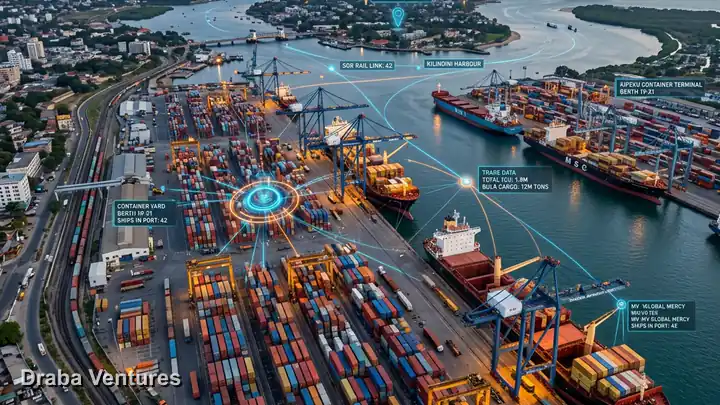
Mombasa as the Commercial Pivot for Five Landlinked Markets
Kilindini Harbour at the Port of Mombasa processes over 1.5 million TEUs annually, representing the primary maritime gateway not only for the Republic of Kenya but for the wider Northern Economic Corridor. Five sovereign landlinked nations—Uganda, South Sudan, Rwanda, Burundi, and the eastern provinces of the Democratic Republic of Congo (DRC)—depend entirely on this maritime artery for their food grain imports.
While domestic Kenyan rice consumption averages approximately 700,000 metric tonnes annually, regional demand across the hinterland exceeds 1.8 million metric tonnes. Indian non-basmati varieties, primarily 5% and 25% broken IR-64 parboiled rice sourced from Andhra Pradesh and Karnataka, dominate regional trade flows due to their affordability, cooking durability, and high consumer acceptance in urban centers like Kampala, Gulu, and Juba.
| Target Market | Transit Highway Corridor | Road Distance from Mombasa | Average Trucking Dwell | Primary Border Post | 20ft Container Freight |
|---|---|---|---|---|---|
| Uganda (Kampala) | Northern Corridor (A104 / RN1) | 1,700 km | 3 - 5 Days | Malaba / Busia (Kenya/Uganda) | $1,800 - $2,400 |
| South Sudan (Juba) | Northern Corridor via Uganda (A104 / Nimule Route) | 2,400 km | 5 - 8 Days | Nimule (Uganda/South Sudan) | $2,800 - $3,800 |
| Rwanda (Kigali) | Northern Corridor via Mirama Hills / Gatuna | 1,900 km | 4 - 6 Days | Gatuna / Katuna (Uganda/Rwanda) | $2,200 - $2,900 |
| DRC (Goma / Bukavu) | Northern Corridor via Uganda & Rwanda | 2,100 km | 6 - 9 Days | Bunagana / Petite Barrière | $3,200 - $4,200 |
| Burundi (Bujumbura) | Northern Corridor via Rwanda (RN1 / RN5) | 2,000 km | 5 - 7 Days | Akanyaru Haut / Kanyaru | $2,400 - $3,200 |
Northern Corridor Logistics & Multimodal Freight Economics
The 1,700-kilometer overland corridor linking Kilindini Harbour to Kampala forms the backbone of regional grain distribution. Efficient transit hinges on selecting the appropriate freight structure: direct long-haul trucking versus multimodal rail-road transit via the Standard Gauge Railway (SGR).
Kenya's Standard Gauge Railway transports containerised cargo from the Port of Mombasa to the Nairobi Inland Container Depot (ICD Embakasi) or Naivasha ICD in approximately 5 to 7 hours at a railage cost of $650 to $850 per 20ft container. Loading onto long-haul trucks at Naivasha eliminates heavy coastal road bottlenecks, saving up to 18 hours of total transit time to the Malaba border.
At the Malaba One-Stop Border Post (OSBP), joint customs teams from the Kenya Revenue Authority (KRA) and the Uganda Revenue Authority (URA) process electronic transit manifests under the Single Customs Territory (SCT) framework. Pre-cleared cargo passes through Malaba within 4 to 8 hours, whereas incomplete documentation incurs border dwell times exceeding 72 hours.
| Destination Country | National Import Tariff (Milled Rice) | Applicable Transit Regime | Customs Authority | Bond Guarantee Required |
|---|---|---|---|---|
| Kenya (Domestic Clearance) | 35% or $200/MT (whichever is higher) + 2.25% IDF + 2.0% RDL | Simba / ICMS Direct Duty Payment | Kenya Revenue Authority (KRA) | None (Direct Duty Settlement) |
| Uganda (Transit via Mombasa) | 75% EAC CET or specific rate (Duty-exempt in transit) | Single Customs Territory (SCT) RADDEx | Uganda Revenue Authority (URA) | COMESA / EAC Regional Customs Transit Bond (RCTG) |
| South Sudan (Re-export) | Customs tariff assessed at Nimule border post | Northern Corridor Transit Bond | South Sudan Revenue Authority (SSRA) | Customs Escort & Commercial Transit Guarantee |
| Rwanda (Transit via Uganda) | EAC Common External Tariff with industrial rebate | Single Customs Territory Electronic Cargo Tracking | Rwanda Revenue Authority (RRA) | Electronic Cargo Tracking System (RECTS) Seal |
| DRC (Eastern Provinces) | National customs code assessed at Goma / Bunia | Transit via EAC Corridor to Bound Border | DGDA (Direction Générale des Douanes) | International Transit Bond & Forwarder Escort |
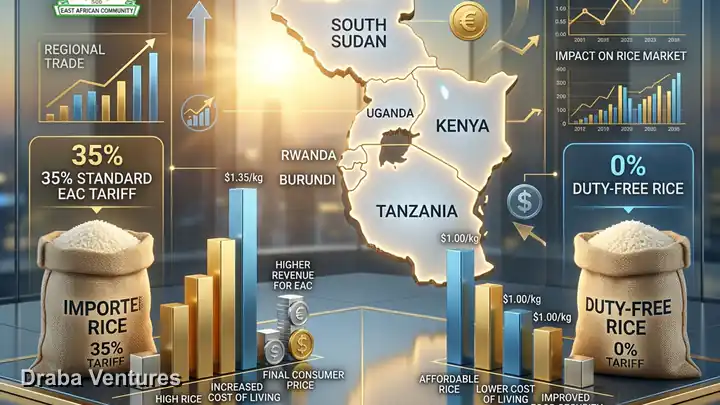
Cross-Border Price Arbitrage & Wholesale Margin Waterfall
Commercial viability across the East African hinterland is underpinned by substantial geographical price differentials. While Indian IR-64 5% broken parboiled rice lands at Kilindini Harbour at approximately $450 to $480 per metric tonne CIF (inclusive of ocean freight and container insurance), wholesale pricing escalates substantially deeper into the interior.
In Nairobi, duty-paid wholesale prices range from $580 to $630 per metric tonne. In Kampala, landlocked logistics costs and local supply deficits drive wholesale rates to $680 to $740 per MT. In Juba, chronic structural grain shortages push commercial prices to $820 to $920 per MT. By consolidating 3 to 5 FCLs (75 to 125 metric tonnes) into a single sourcing contract, distributors dilute fixed port clearing and inspection overheads across larger tonnage, capturing attractive net margins.
| Cost & Revenue Component | Mombasa Port (Base CIF) | Nairobi Wholesale (Domestic) | Kampala Wholesale (Uganda) | Juba Wholesale (South Sudan) |
|---|---|---|---|---|
| Indian IR-64 Parboiled (CIF Mombasa) | $460 / MT | $460 / MT | $460 / MT | $460 / MT |
| Port Handling, IDF (2.25%) & RDL (2%) | $25 / MT | $45 / MT (Duty-paid basis) | $28 / MT (Transit basis) | $28 / MT (Transit basis) |
| Overland Freight & Border Clearance | N/A (Port) | $35 / MT (SGR rail / road) | $85 / MT ($2,100 / 25 MT FCL) | $135 / MT ($3,375 / 25 MT FCL) |
| Destination Duty & Regulatory Fees | N/A | Varies by Kenyan duty band | Assessed via URA SCT | Assessed via SSRA Nimule |
| Average Wholesale Realization | $510 / MT (ex-warehouse) | $610 / MT | $710 / MT | $860 / MT |
| Estimated Net Trading Margin | $25 / MT (5.2%) | $45 / MT (7.9%) | $75 / MT (11.8%) | $115 / MT (15.4%) |
Two Commercial Execution Models: Transit Bond vs Duty-Paid Re-Export
Kenyan cross-border traders operate under two distinct regulatory structures to service inland markets:
1. Pure Transit Bond Model (Direct Consignment): The shipment is entered at Kilindini under an EAC Regional Customs Transit Bond (RCTG) without paying Kenyan domestic import tariffs. Containers are fitted with the Regional Electronic Cargo Tracking System (RECTS) and routed directly across the Malaba border to Ugandan bonded warehouses. Ugandan duties are assessed directly by the Uganda Revenue Authority. This structure delivers the highest cash-flow efficiency for orders exceeding 100 metric tonnes.
2. Duty-Paid Redistribution Model: Consignments are cleared for domestic consumption in Kenya, paying the requisite statutory levies, and held in distributor warehouses in Mombasa or Nairobi. Goods are subsequently sold to Ugandan or South Sudanese merchants on an ex-warehouse basis or re-exported under standard EAC simplified trade declarations. This structure provides flexibility to pivot inventory between Nairobi, Kisumu, and cross-border buyers based on real-time price fluctuations.
Actionable Procurement Directives for Multi-FCL Importers
To maximize commercial returns when executing the Mombasa Gateway Strategy, regional procurement heads must implement four operational disciplines:
- Procure in Minimum Batches of 3 to 5 FCLs: Sourcing single containers results in prohibitive freight and clearing overheads. A 100 MT order (4 FCLs) allows simultaneous inventory splitting across Nairobi and Kampala wholesale hubs.
- Contract 21 Demurrage Free Days at Origin: Overland transit through Mombasa to Kampala requires up to 10 days including border dwell. Ensure the ocean Bill of Lading explicitly specifies 21 container detention free days with CMA CGM, MSC, or Maersk.
- Mandate High-Strength 50kg Woven Polypropylene Bags: Long-distance transit over corrugated roads and manual transshipment at border warehouses demand 120-gram export-grade bags with inner poly-liners to prevent rupture and moisture ingress.
- Partner with Direct Mill Exporters in India: Eliminating intermediaries in Karnataka and Andhra Pradesh secures direct factory FOB rates, ensuring verifiable SGS phytosanitary quality and reliable vessel bookings.
Frequently Asked Questions
Can Indian rice cleared at Mombasa Port be legally re-exported to Uganda or South Sudan?
What is the Northern Corridor and why is it vital for East African rice trade?
What is the typical trucking cost from Mombasa to Kampala for a 20ft rice container?
Why do regional grain distributors order 3 to 5 FCLs rather than single containers?
What critical documents are required for cross-border transit at the Malaba border?
How does Draba Ventures support regional East African rice distributors?
Direct Regional Grain Procurement & Northern Corridor Logistics
Partner with Draba Ventures for multi-FCL Sortex non-basmati rice exports from India to East Africa. Benefit from verified 21-day container detention terms, complete PVoC inspection certificates, and bank-guaranteed documentation.
Request Proforma Invoice