Clearing Indian rice shipments through Kilindini Harbour, Mombasa in 2026 requires strict adherence to Kenya Revenue Authority (KRA) electronic filing on the Simba/ICMS system. Key statutory import costs include the Import Declaration Fee (IDF at 2.25% of CIF value) and the Railway Development Levy (RDL at 2% of CIF value). Effective May 2026, mandatory Kenya Nuclear Regulatory Authority (KNRA) portal screening adds 24-48 hours to terminal dwell time. Securing a minimum of 14 to 21 carrier demurrage free days is critical to eliminate container detention fees of $50 to $150 per day.
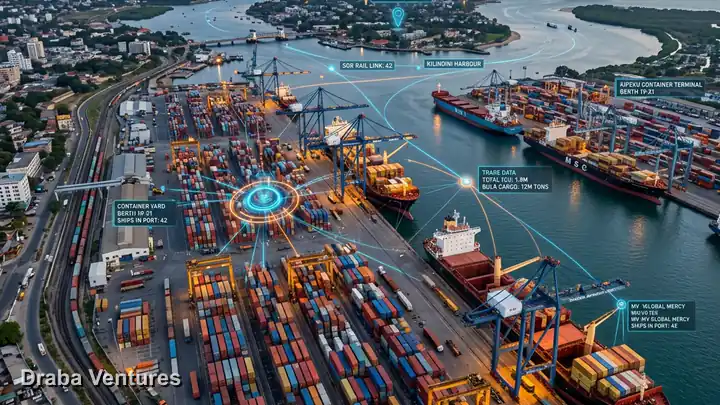
Port of Mombasa Infrastructure & Maritime Role in East Africa
Kilindini Harbour at the Port of Mombasa serves as the primary commercial maritime gateway for the Republic of Kenya and landlinked nations along the Northern Economic Corridor, including Uganda, South Sudan, Rwanda, and eastern Democratic Republic of Congo. Operated by the Kenya Ports Authority (KPA), the port processes substantial volumes of Indian non-basmati rice, primarily IR-64 Parboiled, white milled rice, and broken varieties sourced from Andhra Pradesh and Karnataka.
Modern container operations are centered at Container Terminal 1 (Berths 16–19) and Container Terminal 2 (Berths 20–21). While terminal infrastructure has modernized with post-Panamax ship-to-shore gantry cranes, bureaucratic documentary handoffs between multi-agency regulators require tight synchronization to prevent costly storage and equipment detention charges.
| Regulatory Agency | Statutory Fee / Basis | Operational Mandate | Critical Document Required |
|---|---|---|---|
| Kenya Revenue Authority (KRA) | IDF: 2.25% of CIF / RDL: 2.0% of CIF | Assessment of statutory levies and import tariff enforcement. | Electronic Import Declaration Form (IDF) & Commercial Invoice. |
| Kenya Plant Health Inspectorate (KEPHIS) | $80 - $150 per FCL inspection fee | Verification of freedom from quarantine agricultural pests. | Original Phytosanitary Certificate issued by Indian NPPO / APEDA. |
| Kenya Nuclear Regulatory Authority (KNRA) | Portal screening fee included in port dues | Mandatory radiation gate screening for all imported grains. | KNRA Certificate of Compliance & Clean Radiation Report. |
| Kenya Bureau of Standards (KEBS) | PVoC Certificate of Conformity verification | Verification of quality standards (KS EAS 128:2020 for milled rice). | Pre-Export Certificate of Conformity (CoC) from SGS/Bureau Veritas. |
| Kenya Ports Authority (KPA) | Wharfage & Shore Handling: ~$180/TEU | Vessel discharge, container stacking, and gate release operations. | Delivery Order (DO) issued by ocean shipping line agent. |
Demurrage Rates & Free Time Negotiations for 2026
Container demurrage represents the single largest financial exposure for Kenyan rice importers. Standard shipping line contracts typically provide only 7 free days from vessel discharge to empty container return. However, because multi-agency inspections (KRA verification, KEPHIS sampling, and KNRA screening) typically consume 4 to 6 business days, a 7-day free window leaves zero buffer for document delays or system downtime.
Draba Ventures contracts direct carrier agreements with major ocean lines serving the India-Mombasa trade route (including CMA CGM, MSC, Maersk, and PIL) to secure 14 to 21 demurrage free days written directly into the ocean Bill of Lading, protecting buyers from escalating penalty tariffs.
| Shipping Line | Standard Free Days (Mombasa) | Draba Ventures Contracted Free Time | Demurrage Rate (Days 8-14) | Demurrage Rate (Days 15+) |
|---|---|---|---|---|
| CMA CGM (East Africa Service) | 10 Days | 21 Days | $50 / 20ft / Day | $110 / 20ft / Day |
| MSC (Mediterranean Shipping Co.) | 7 Days | 14 to 21 Days | $60 / 20ft / Day | $120 / 20ft / Day |
| Maersk Line | 7 Days | 14 to 21 Days | $65 / 20ft / Day | $130 / 20ft / Day |
| Pacific International Lines (PIL) | 9 Days | 18 to 21 Days | $45 / 20ft / Day | $95 / 20ft / Day |
Step-by-Step Documentary Workflow: Seven Days Prior to Discharge
Efficient clearance at Mombasa begins well before the container vessel berths at Kilindini. Failure to file pre-arrival declarations through the Kenya TradeNet electronic single window results in automatic manifest holds and immediate transfer of containers to costly off-dock Container Freight Stations (CFSs).
Importers must execute the documentary sequence in chronological coordination with the Indian exporter's courier dispatch of original negotiable instruments.
| Milestone Timeline | Required Action & Execution | Responsible Entity | Risk Mitigation Protocol |
|---|---|---|---|
| Day -7 (Vessel at Sea) | File IDF via Kenya TradeNet; pay 2.25% fee. | Kenyan Importer / Clearing Agent | Ensures KRA manifest matching immediately upon shipping line filing. |
| Day -5 (Pre-Arrival) | Courier original B/L, Phyto, and CoC to Nairobi. | Draba Ventures (Exporter) | Transmit scanned copies via DHL tracking; confirm courier arrival. |
| Day -2 (Manifest Inward) | Shipping line submits inward manifest to KRA ICMS. | Ocean Carrier Line Agent | Verify manifest details match IDF consignment weight exactly. |
| Day 0 (Vessel Berthed) | Container discharged to KPA container yard. | Kenya Ports Authority | Secure Delivery Order (DO) upon payment of local line charges. |
| Day +1 to +2 (Port Clearance) | KEPHIS draws grain samples; KNRA scans container. | Regulatory Inspectors & Agent | Ensure moisture certificate (<14%) is readily presented. |
| Day +3 (Customs Release) | KRA issues electronic Customs Release Order (CRO). | Kenya Revenue Authority | Clear port wharfage charges via KPA e-portal. |
| Day +4 (Gate Pass & Loading) | Truck enters terminal; container loaded for Nairobi. | Haulage Contractor | Inspect physical container seal integrity before terminal gate exit. |
Northern Corridor Logistics: Mombasa to Nairobi Depots
Once cleared from the port gates, cargo moves along the Northern Corridor either by licensed multi-axle heavy commercial vehicles or via the Standard Gauge Railway (SGR) freight service connecting Mombasa to the Nairobi Inland Container Depot (ICD) at Embakasi.
Direct road trucking provides superior cargo control, flexible offloading schedules at private industrial warehouses in Industrial Area, Baba Dogo, or Thika, and avoids secondary ICD terminal handling charges and container return congestion in Nairobi.
Frequently Asked Questions
What is the exact IDF fee for rice imports at Mombasa Port?
What is the Railway Development Levy (RDL) applied to Kenyan rice cargo?
How does KNRA radiation screening impact Mombasa Port clearance timelines?
How many demurrage free days should an importer negotiate for Mombasa?
What are the total port-side handling fees at Mombasa for a 20ft container?
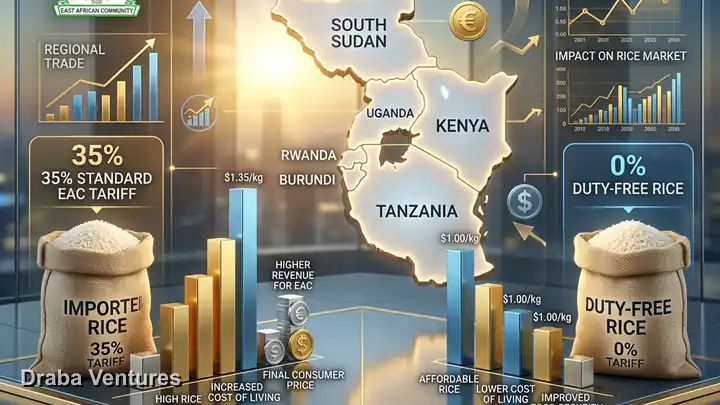
What customs duty applies to Indian rice imports into Kenya in 2026?
Direct Rice Procurement & Mombasa Port Clearance
Partner with Draba Ventures for certified non-basmati rice imports into East Africa. Benefit from verified 21-day container detention terms, complete PVoC inspection certificates, and bank-guaranteed documentation.
Request Proforma Invoice