Kenya imports over 800,000 MT of rice annually, with India supplying over 70% of total volume. Indian IR-64 Parboiled Rice (HS 1006.3010) dominates wholesale trade in Nairobi and Mombasa due to its cost advantage and high cooking yield. Statutory clearance requirements at Mombasa Port include: (1) mandatory KEBS PVoC Certificate of Conformity via SGS India, (2) Phytosanitary Certificate declaring freedom from Khapra beetle, (3) 2.25% IDF, and (4) 2.0% RDL. Ocean transit from Kakinada/Mundra takes 16 to 20 days.
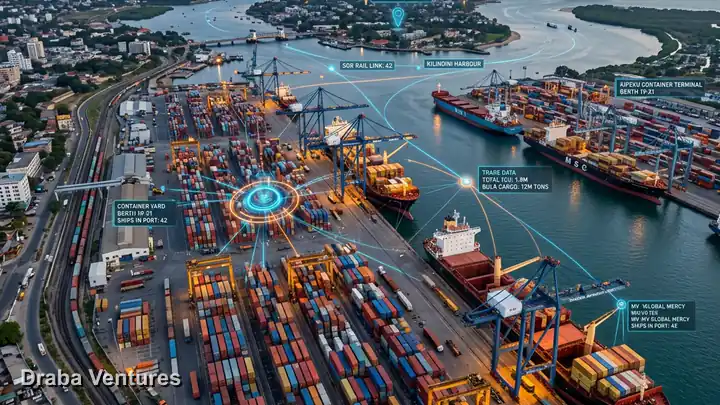
1. Kenya Rice Market Dynamics: The 80% Import Deficit
Kenya represents East Africa’s largest and most lucrative commercial rice import destination. Domestic paddy cultivation—primarily concentrated in the Mwea, Ahero, and Bunyala irrigation schemes—produces under 200,000 metric tonnes of milled rice per year. With nationwide annual consumption exceeding 1,000,000 MT, Kenya depends on ocean imports for more than 80% of its staple requirement.
India is consistently Kenya's leading trade partner, supplying over 70% of all imported rice by volume. This dominance is driven by three core commercial factors:
- Unmatched FOB Mill-Gate Economics: Advanced, high-capacity parboiling mills in Karnataka's Tungabhadra basin and Andhra Pradesh deliver export-grade IR-64 rice at an FOB cost $10 to $20 per metric tonne below alternative Asian origins.
- Direct Maritime Connectivity to Mombasa: Frequent container feeder links from Kakinada, Chennai, and Mundra ensure consistent 16-to-20 day transit times into Kilindini Harbour.
- East African Regional Distribution: Mombasa Port functions not only as Kenya's gateway but as the primary transit corridor for re-exporting containerized rice under customs bond to Uganda, South Sudan, Rwanda, and eastern DRC.
2. Primary Rice Varieties in High Demand Across Kenya
Kenyan commodity buyers, institutional caterers, and wholesale merchants in Nairobi (Nyamakima, Eastleigh) and Mombasa (Kongowea) source specific varieties based on consumer demographics and price points:
| Rice Variety | Target Market Segment | HS Tariff Code | Standard Physical Specifications | Commercial Advantage |
|---|---|---|---|---|
| IR-64 Parboiled Rice | Mass Wholesale & Catering | 1006.3010 | 100% Sortex, moisture ≤14%, 5%/15% broken | Lowest landed cost, non-sticky cooking, high grain expansion |
| IR-64 Long Grain White | Urban Retail & Institutional Food | 1006.3090 | Well-milled, moisture ≤13.5%, 5% broken | Preferred for budget retail packaging and institutional feeding |
| RNR 15048 Samba Masuri | Health Retail & Diabetic Diet | 1006.3090 | Low Glycemic Index (<55), moisture ≤13%, 2% broken | High-margin positioning in upscale supermarkets in Nairobi |
| Sona Masoori (Raw/Steam) | Diaspora & Premium Groceries | 1006.3090 | Medium grain, aromatic, moisture ≤13% | Staple grain for Kenya's substantial South Asian business community |
| 1121 Basmati (Steam/Sella) | HORECA & Luxury Retail | 1006.3020 | Extra long grain (8.35mm+), elongation ratio 2.0x | High-margin menus in five-star hotels and festive catering |
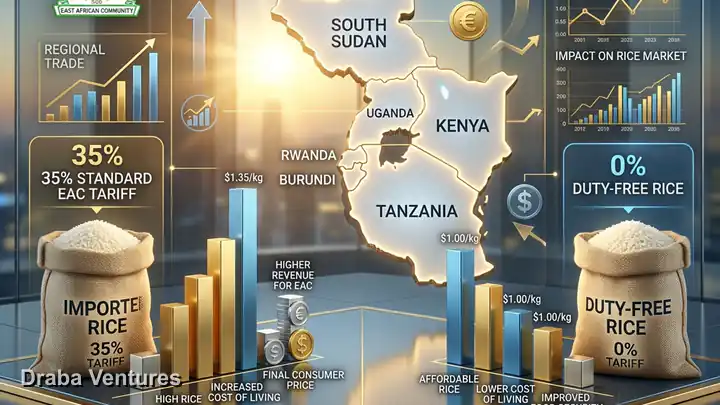
3. Tariff Structure & Statutory Port Levies at Mombasa
Accurate landed cost calculations are essential to protect wholesale profit margins. Rice imports entering Kenya through Kilindini Harbour are governed by the East African Community Common External Tariff (EAC CET) along with Kenyan domestic import taxes:
- EAC Common External Tariff (CET): Standard CET rates on milled rice range from 35% to 75% ad valorem, unless operating under special duty-free gazetted windows (such as the 490,000 MT Grade 1 quota).
- Value Added Tax (VAT): 16% standard VAT applied on the cumulative customs duty value.
- Import Declaration Fee (IDF): 2.25% of the CIF value (minimum KES 5,000), filed electronically by the Kenyan buyer via the Kenya TradeNet portal prior to vessel sailing.
- Railway Development Levy (RDL): 2.0% of CIF value, collected by the Kenya Revenue Authority (KRA) at customs entry lodgment.
- KPA Port Wharfage & Stevedoring: Terminal handling charges billed by the Kenya Ports Authority upon container discharge.
4. Mandatory Documentation & KEBS PVoC Verification Pipeline
Kenyan customs authorities enforce rigorous pre-shipment compliance protocols. Importers must ensure their Indian mill supplies a flawless documentary dossier before vessel arrival:
- KEBS PVoC Certificate of Conformity (CoC): Under Kenya Bureau of Standards Legal Notice No. 78, every commercial rice container must be inspected in India prior to loading. Under the 2026–2029 cycle, SGS India serves as the primary accredited agency. Consignments landing without a valid CoC face an automatic 15% CIF penalty surcharge and mandatory destination inspection.
- NPPO Phytosanitary Certificate: Issued by the Indian Ministry of Agriculture, certifying freedom from dangerous agricultural pests, specifically the Khapra beetle (Trogoderma granarium).
- Fumigation Certificate: Verification of professional methyl bromide or phosphine fumigation prior to container stuffing.
- Clean Ocean Bill of Lading (B/L): Expressing precise variety descriptions, container numbers, and contractual 21-day detention terms.
- Commercial Invoice & Packing List: Detailed breakdown of bag counts, gross/net weights, and exact HS tariff classifications.
5. Ocean Routes, Transit Times & Terminal Operations
Maritime shipments from Indian loading ports connect directly to Mombasa via major container shipping lines:
| Indian Loading Port | Primary Transshipment Hub | Ocean Transit to Mombasa | Recommended Cargo Type |
|---|---|---|---|
| Kakinada Port (Andhra Pradesh) | Direct / Colombo Feeder | 16 – 20 Days | IR-64 Parboiled Rice in 20ft FCL bulk containers |
| Chennai Port (Tamil Nadu) | Direct / Colombo Feeder | 16 – 19 Days | Sona Masoori, RNR Samba Masuri, IR-64 Parboiled |
| Mundra Port (Gujarat) | Direct / Jebel Ali Feeder | 18 – 22 Days | 1121 Basmati, Long Grain White, Parboiled Rice |
| JNPT Mumbai (Maharashtra) | Direct / Salalah Feeder | 15 – 19 Days | Mixed commodity parcels, Basmati, Sona Masoori |
6. Direct-Mill Sourcing with Draba Ventures
Draba Ventures Private Limited bridges the gap between South Indian paddy harvesting belts and East African wholesale distributors. Operating ultra-modern Sortex milling plants in Sindhanur, Karnataka—with dedicated port desks in Kakinada and Chennai—we provide unparalleled import security:
- Direct Mill-Gate Pricing: By eliminating intermediaries, we provide wholesale buyers with competitive FOB and CIF rates for first-grade IR-64, RNR Samba Masuri, and Sona Masoori.
- Guaranteed PVoC & KNRA First-Pass Clearance: Every production batch is pre-screened in NABL-accredited laboratories, ensuring 100% compliance with KEBS KS EAS 128:2013 and KNRA radiation baselines.
- Contractual 21-Day Mombasa Detention: We negotiate 21 days of container free time directly on the ocean Bill of Lading with premier shipping lines (Maersk, MSC, CMA CGM).
- Rapid Document Dispatch via DHL: Original shipping documents are dispatched via express courier within 48 hours of vessel departure, enabling your clearing agent to pre-lodge customs entries well before arrival.
Frequently Asked Questions
What rice varieties from India have the highest commercial demand in Kenya?
What is the KEBS PVoC requirement and how does it affect Kenyan importers?
What are the standard ocean transit times from India to Mombasa Port?
What import duties and statutory fees apply to rice landing at Mombasa?
Can rice imported into Mombasa be transshipped to Uganda or South Sudan?
How does Draba Ventures support Kenyan importers against port demurrage?
Direct Mill Sourcing for Kenyan Rice Importers
Partner with Draba Ventures for guaranteed compliance in Indian rice exports to East Africa. Benefit from contractual 21-day container detention terms, guaranteed first-pass SGS PVoC certification, certified zero-radiation compliance under KNRA, and direct mill-gate pricing from Karnataka and Andhra Pradesh.
Request Proforma Invoice